mac808.com

mac808.commac808.commac808.com
Page 1
Page 2
Page 3
Page 4
Sovereignty
Blog 2022/24/25
Books
Schools n H-less
God
Commnityism
Hawai'i Nation
Together
A New Focus
Picture
Republicans
Money
Biography
In Conclusion
Donate
News Letter
Blank
Shop

mac808.com

mac808.commac808.commac808.com
Page 1
Page 2
Page 3
Page 4
Sovereignty
Blog 2022/24/25
Books
Schools n H-less
God
Commnityism
Hawai'i Nation
Together
A New Focus
Picture
Republicans
Money
Biography
In Conclusion
Donate
News Letter
Blank
Shop
More
  • Page 1
  • Page 2
  • Page 3
  • Page 4
  • Sovereignty
  • Blog 2022/24/25
  • Books
  • Schools n H-less
  • God
  • Commnityism
  • Hawai'i Nation
  • Together
  • A New Focus
  • Picture
  • Republicans
  • Money
  • Biography
  • In Conclusion
  • Donate
  • News Letter
  • Blank
  • Shop
  • Sign In
  • Create Account

  • Orders
  • My Account
  • Signed in as:

  • filler@godaddy.com


  • Orders
  • My Account
  • Sign out

Signed in as:

filler@godaddy.com

  • Page 1
  • Page 2
  • Page 3
  • Page 4
  • Sovereignty
  • Blog 2022/24/25
  • Books
  • Schools n H-less
  • God
  • Commnityism
  • Hawai'i Nation
  • Together
  • A New Focus
  • Picture
  • Republicans
  • Money
  • Biography
  • In Conclusion
  • Donate
  • News Letter
  • Blank
  • Shop

Account

  • Orders
  • My Account
  • Sign out

  • Sign In
  • Orders
  • My Account

Hawai'i Governance and Sovereignty: Clyde McClain Lewman's Vision for Unity

Hawai'i Governance and Sovereignty: Clyde McClain Lewman's Vision for UnityHawai'i Governance and Sovereignty: Clyde McClain Lewman's Vision for UnityHawai'i Governance and Sovereignty: Clyde McClain Lewman's Vision for UnityHawai'i Governance and Sovereignty: Clyde McClain Lewman's Vision for Unity

Hawai'i Governance and Sovereignty: Clyde McClain Lewman's Vision for Unity

Hawai'i Governance and Sovereignty: Clyde McClain Lewman's Vision for UnityHawai'i Governance and Sovereignty: Clyde McClain Lewman's Vision for UnityHawai'i Governance and Sovereignty: Clyde McClain Lewman's Vision for UnityHawai'i Governance and Sovereignty: Clyde McClain Lewman's Vision for Unity

Aloha and Welcome Everyone

"They came like lambs speaking softly... today, all the islands are theirs, all the land, all the cattle - everything is theirs... They who had nothing now have everything." These reflections from the local to Jack London illustrate the historical narrative of Hawai'i, a place where discussions about governance and political change have taken on new significance, particularly regarding sovereignty in Hawaii. The evolution of unity in Hawaii reveals that ignoring facts is not justice, and liking something does not make it right. Time does not transform a wrong into a right, and it's crucial to remember that Hawai'i is not America, nor is Hawaii merely a state—it's a complex culture with its own identity, as expressed by Clyde McClain Lewman and others.

I am a nonpartisan, uncorrupted candidate for Governor.

I am running for governor of Hawaii as a nonpartisan, uncorrupted candidate.

In the beauty of Hawaii, thousands will starve to death. 


Governor Dr. Josh Green, a physician skilled at delivering tough news with compassion, is currently in charge of Hawai'i governance. 


Dr. Green prescribes solutions to his patients, expecting them to fulfill their commitments, yet he seems unaware that such an approach doesn't apply to policies addressing pressing issues like homelessness, which has surged yearly since he assumed office. This crisis outpaces his small home prescription strategy and his plan to replace 88,000 cesspools that leak 53 million gallons of polluted wastewater daily into our land, ocean, and beaches. His target of 3,500 cesspool replacements annually is currently sputtering at around 450. Additionally, the homebuilding efforts he delegates to union allies raise concerns. The Ewa Kapolei plain is set to accommodate over 200,000 residents, placing them in one of the most perilous tsunami-prone areas, where a significant tsunami could stem from an earthquake-induced landslide on Mauna Loa. The only precaution seems to be a tsunami sign at Ewa Beach Park, directing people to higher ground, which is six miles away on the H-1 and may be gridlocked in minutes. We can and must do more for our community.


As the prescription governor, Dr. Green has even hinted at a presidential run, claiming his medical expertise equips him to heal the nation. Really? More prescriptions for issues affecting political change in Hawaii? 


Now, let me introduce myself: Aloha, everyone!


I am Clyde McClain 'Mac' Lewman, a nonpartisan candidate for governor. My website is mac808.com. 


I was born and raised in Eugene, Oregon, and graduated from the University of Oregon in 1974 with a Bachelor of Science in Psychology, alongside minors in Philosophy and Economics.  


My family and I initially moved to Portland, Oregon, where I took a role at a plywood and lumber brokerage firm. What started as sales across the United States evolved into exporting from almost every state to Western Europe and importing from China and South America. 


Currently, I own a small Oregon-registered wood-products internet brokerage that I manage from Hawaii, Mico22 LLC (douglasfirusa.com).  


The corruption evident in United States Congress, from taking corporate and Israeli bribes to facilitating murder and genocide, highlights a troubling reality where billionaires shape policies for selfish gain. 


Governor Josh Green's governance reflects a troubling trend; he has accepted millions from super PACs tied to the Hawaii Regional Council of Carpenters (HRCC). This includes organizations like Be Change Now, For a Better Tomorrow, PRP, and Forward Progress, among others. 


Brooke Wilson, Governor Green's chief of staff, brings substantial experience as a political operative for the HRCC, granting the council undue influence in Hawai'i governance. 


Super PACs have tainted the political landscape, and only reform through Congress or a heightened sense of personal ethics can initiate genuine political change in Hawaii. 


Notably, the HRCC Super PACs spent over $5 million in a failed effort to prevent Sylvia Luke from becoming Lieutenant Governor due to her opposition to the light rail project, indicating a troubling trend of coercion within Hawaii's politics. Given that Lt Governors often ascend to the governor's office, it seems clear who the HRCC may back for the 2026 gubernatorial race: Kauai Mayor Derek Kawakami. 


If I were to become governor, I would consider Sylvia Luke as my possible chief of staff and maybe the next governor of Hawaii. My goal is to direct a shift in the integrity and trajectory of Hawaiian governance during my single term. 


Both major parties have normalized policies that facilitate human rights violations abroad and systemic corruption at home. Voting for red or blue means participating in this cycle.  


Hawaii does not need fragmented hybrid political parties; instead, we should embrace unity in Hawaii through nonpartisan governance to foster justice and equality. 


Become part of the solution by voting nonpartisan. 


For your information, I have practiced and taught tai-chi for 45 years, Chi kung for 35 years, and Yoga for 25 years. For two years, I also led advanced meditation classes for seniors at the University of Hawaii. 


I am a disciple of Paramhansa Yogananda and an ordained minister at churchofthesacred.com. 


Importantly, I support unions and have built a career catering to carpenters, builders, and architects, but I oppose the influence of money that compromises our political leaders. 


Mahalo! 


Namaste! 


Aloha! 


Surrender your body to the world. 

Your mind to the universe. 

Your heart to God. 

Amen!

Unions and the Light Rail

Unions

I've spent my entire working life in the wood business, and I continue to do so. I appreciate and support unions for providing workers with what they need and deserve. However, I believe unions should not interfere in elections and governance. Josh Green's governance in Hawai'i is compromised due to his connections with the Carpenters Union (HRCC) and his chief of staff, Brooke Wilson. For true political change in Hawaii, unions should align with governance, not the reverse, to foster unity in Hawaii and respect sovereignty in Hawaii, reflecting the views of advocates like Clyde McClain Lewman.

The LightRail

I agree with Sylvia Luke regarding the light rail; however, our reasons differ when it comes to Hawai'i governance. I created a light rail system that would cover the entire island of Oahu, featuring a solar roof with 1.5 million commercial solar panels and open-air, smaller cars that can accommodate bicycles, surfboards, and small electric scooters. Each stop includes comfort stations, food services, and options for overnight camping in tents or small houses, with locals permitted to rent rooms. I've also designed various routes and alternative paths that could enhance connectivity across the island, which supports the political change Hawaii needs. This system could serve 250,000 homes, generating $50,000,000 per month at just $200 per household. Additionally, tourists could pay $100 per day for a family of four, while locals would pay between $5 to $25 per day, totaling 1.5 million per day. For the Big Island, I've outlined a safe, winding pathway that circles the entire island, similar to the Camino de Santiago in Spain, with comfort and camping along the route, emphasizing the importance of unity in Hawaii and allowing locals to rent rooms. This light rail and pathway system can play a crucial role in fostering a sense of sovereignty in Hawaii.

St Francis School Sale Situation

When I was a recently elected member of the Manoa Neighborhood Board, I was introduced to issues regarding Hawai'i governance when the Avalon Group presented their plans for the St. Francis School property adjacent to the University, as mandated by the city-county. This presentation was followed by three public meetings that highlighted significant concerns from the community about the proposed development on the 11.12 acres bordering the University of Hawaii. The sisters sought $30 million for the property, which had a tax assessment of over $32.5 million, with rumors suggesting it was as high as $40 million. The University offered $20 million, while Avalon Group Development ultimately purchased it for $23.5 million. The Manoa Neighborhood Board unanimously voted against the development plans due to numerous pressing issues, many of which Avalon was unable to address satisfactorily. During the public meetings attended by Pamoa Road residents and other community members, who were all deeply concerned about the impact on our quiet and peaceful 1940s neighborhood of about 60 houses with a narrow 20' street, Avalon representatives insisted they respected the Manoa community's feelings. However, during the second public meeting at the Manoa Grade School cafeteria, Christin Camp, the president of Avalon, abruptly declared, 'I don't care how any of you feel or think; I am developing this property.' This kind of disregard exemplifies the political change in Hawaii that many feel has eroded community voices in decision-making. The Department of Planning and Permitting (DPP) only required minor changes to the plan, resulting in 85 total houses, all detached single-family homes, including 73 homes with ground-floor 'in-law suite' options for multi-generational living, which could amplify traffic concerns. This could potentially mean 316 cars for 85 households, along with a projected additional 1,000 car trips per day on narrow Pomona Road, a road with a hazardous intersection. The site's value for the University is immense, but bureaucratic constraints have hindered UH, enabling Avalon to progress swiftly, allowing the University to lose a priceless opportunity. Many community members, including myself, reached out to the DPP, led by Major Rick Blangiardi, voicing our concerns about safety and overcrowding. Unfortunately, the DPP's response to Avalon was minimal, effectively rubber-stamping the development plan, supported financially by both Governor Josh Green and Honolulu Mayor Rick Blangiardi, who are backed by the Hawaii Carpenters Market Recovery Program (HCMRP / HRCC). The State Legislature's failure to enact a swift funding bill inadvertently opened a door for the Avalon Group, raising questions about the urgency and unity in Hawaii's governance. My belief in effective governance led me to advocate for year-round legislative action, rather than a mere 60 out of 360 days of engagement—it's simply ludicrous! After learning that the transaction was completed between St. Francis School and Avalon, I discussed the prospects of a $40 million offer from Avalon to UH with Andrew T Garrett, the Manoa District 22 state representative, who indicated he had already heard it might be as much as $48 million. If I were governor, I believe such developments would be approached with more caution. With my experience as a licensed real estate agent since 1992 in Oregon and since 1998 in Hawaii, I am aware of ways to maneuver these deals responsibly. Yet, with the DPP accountable to Mayor Blangiardi, who is allied with Christin Camp and significantly supported by the HRCC, it allowed the DPP to expediently push the transaction through. I can assert with certainty that in Oregon, Avalon would likely have been mandated to widen Pamoa Road, install sidewalks, and implement traffic controls at the intersecting Alaula Road. Moreover, I doubt Avalon would have been permitted additional dwelling units (ADUs) given the tight constraints within the 11 acres. Ultimately, the outcome of the Avalon Group's required Manoa Neighborhood Board meetings and three public meetings, where valid concerns were raised about sovereignty in Hawaii, was largely disregarded. This raises the question: why should residents suffer through such stressful discussions when it seems Avalon will have its way regardless? A commonly touted slogan supporting development claims 'We need housing,' yet statewide, there are approximately 75,000 to 76,000 houses, condos, and apartments that sit vacant, reminding us all of the need for unity in Hawaii to reconsider our development strategies.

Housing Moratorium

As governor, I, Clyde McClain Lewman, will immediately impose a building moratorium on the Ewa-Kapolei plain because the entire 40,000 acres, with elevations ranging from 10 to 50 feet, pose a potential death trap for the anticipated future population of 180,000. A major tsunami generated by a monumental Mauna Loa earthquake that triggers a landslide could reach heights of 1,700 feet, travel underwater at over 500 miles per hour, strike the south side of Oahu, and cause catastrophic death and destruction. Though scientifically unlikely in our lifetime, any less significant event could lead to disaster, especially in that expansive plain area where escape is virtually impossible. Although the city has placed a tsunami warning sign at Ewa Beach Park advising people to climb to higher ground, it is crucial to recognize that there is no higher ground available—the nearest elevation, the H-1, is six miles from Ewa Beach Park. 


My tsunami protection suggestion for Hawai'i governance calls for high-rise condos and apartments, standing 10-15 stories tall, with parking occupying at least the bottom two levels and car ramps ensuring easy access for pedestrians. The first floor above parking would serve as a recreation space complete with a food court for community gathering, reflecting a new political change in Hawaii towards improved disaster preparedness. Furthermore, all buildings should be constructed sideways to effectively handle large southern waves, promoting sovereignty in Hawaii and unity in Hawaii by ensuring the safety of our residents and visitors alike.

Food is Life and Food is Freedom

I have outlined community food-growing zones on each island, with each zone sharing equipment. I envision these zones evolving into spiritual yoga communities or other spiritually based farming communities that foster political change in Hawaii. Below is a simplified outline:


The Island-by-Island Acts


We are not creating a slow, one-size-fits-all government bureaucracy. Instead, we are launching dedicated, localized initiatives tailored for the unique environment of each island under the guidance of individuals like Clyde McClain Lewman:


OACA (Oʻahu Agricultural Cooperative Act): Launching flagship zone OACA-1 on the Leeward Coast, running from KoʻOlina to Kaʻena Point, for solar irrigation and cultural farming sanctuaries. Six additional zones are outlined.

MACA (Maui Agricultural Cooperative Act): Reclaiming former central valley plantation lands to build diversified family food hubs as a step toward greater sovereignty in Hawaii.

HACA (Hawaiʻi Agricultural Cooperative Act): Establishing regional processing and cold-storage hubs in Kona and Hilo to ease distribution, along with food growing zones that enhance unity in Hawaii.

KACA (Kauaʻi Agricultural Cooperative Act): Protecting historic river valleys and providing financial safety nets for multi-generational taro farmers and more.

MOACA and LACA (Molokaʻi and Lānaʻi Agricultural Acts): Funding community-owned farming networks to reduce reliance on expensive shipping barges.


I would like these farm communities to serve as spiritual yoga communities that also embrace other sacred practices, such as tai-chi, chi-kung, martial arts, hula, and any other sacred practices, with yoga as the foundation.


Be aware that every proposal beneficial to the islands and the people may face strong opposition. For example, if the islands produced 60% of their food, it would provide Hawaii the resilience to survive a national or international disaster, potentially impacting shipping revenues for longshoremen, as well as profits for stores like Costco and Safeway. These smiling faces are the ones that keep Hawaii connected to the continent.

The trajectory of the world and of Hawai'i must change

Food is Life - Food is Freedom

Hawai'i imports 85/90% of its food requirements, totaling around 180 million pounds per year. Notably, Costco alone accounts for an estimated 30 million pounds, or 17-18% of those imports. This reliance on food imports underlines the need for political change in Hawaii, especially regarding its governance. If Hawaii can reduce its food imports to 40%, it could enhance its sovereignty in Hawaii and survive most crises. For instance, during an electrical grid blackout, ships could still sail and arrive, but loading and offloading would create major bottlenecks, highlighting the urgency for effective governance and unity in Hawaii. 


As we look at the future of the Mississippi River and the Colorado River Basin, we see an immediate and critical crisis. Agriculture consumes around 70-80% of the total water supply for irrigation, resulting in fierce competition between cities and farmers, with many fields left fallow. This context of scarcity resonates with our challenges in Hawai'i, where over 4,000 to 5,500 AI data centers across the continent are projected to increase by 2030, consuming a staggering 2.45 trillion gallons of water annually and up to 12% of all electricity. 


Currently, Hawai'i boasts 10 data centers that utilize a closed-loop cooling system, bypassing traditional water sources due to their smaller size relative to continental data centers. Meanwhile, the Ogallala Aquifer in the US, which spans eight Midwest and Great Plains states, is severely depleted as it's being pumped for agriculture faster than it naturally recharges. Instances like Elon Musk's massive data centers drawing 1.3 million gallons daily from the Memphis Sand Aquifer highlight the magnitude of this issue when juxtaposed against Hawai'i's daily consumption of roughly 1.2 million gallons of gas.


Food imports under the leadership of Josh Green have remained stagnant due to the bureaucratic complexities of Hawai'i governance. As I advocate for significant political change in Hawaii, it is crucial to address the pressing needs of our agricultural landscape. It has taken over 20 years for the Department of Land and Natural Resources (DLNR) to agree on transferring agricultural land to the Hawaii Department of Agriculture (HDOA). Such delays are unacceptable, and if I am elected governor, I will impose reasonable deadlines and replace department leaders who hinder progress in these matters, reinforcing unity in Hawaii.


Additionally, the passage of the Dark Money Bill SB2471 took an astonishing 16 years, demonstrating how ineffective governance can stifle timely action. The current state constitution sets a 60-day per year limit for legislative sessions, a framework that severely limits our capacity to address urgent issues. I fully support HB 1425 and SB 1514, which promote continuous meetings and advocate for SB 149 to amend the constitution for better responsiveness. The world moves too quickly for wasting time; we must prioritize solving problems rather than merely contemplating them.

Increasing Homelessness

Dr. John Green ran his campaign on solving homelessness in Hawaii, reflecting a commitment to political change in Hawaii. Despite his efforts, homelessness has grown every year since he took office. His tiny house program is not keeping up with the demand. Furthermore, providing shelter is not enough; we must also create purpose. Those who are mentally sound can earn money by participating in farming and engaging in organized clean-up programs that pick up garbage across the islands, fostering a sense of unity in Hawaii. For those with severe mental illness who cannot be treated as outpatients, it is crucial to ensure they receive respectful care in a mental facility rather than incarceration. As Clyde McClain Lewman emphasizes, we all appreciate and respect a clean house and car, and by keeping all the islands clean, we can gain respect in and for Hawaii and uphold the sovereignty in Hawaii.

88,000 Cesspools are leaking 50 million gallons a day into the ground.

Dr. Josh Green's plan, which aligns with the visions of leaders like Clyde McClain Lewman, called for 3,500 cesspool replacements per year. However, the current average stands at around 400, leaving a significant gap that highlights flaws in Hawai'i governance. Homeowners are expected to cover the $25-35k replacement costs themselves, even though it was the cities and counties that approved the cesspools initially. This issue represents a serious social health problem that necessitates immediate political change in Hawaii, as contamination from these cesspools is impacting Hawai'i's beaches and the nearby ocean waters. Addressing these concerns is crucial for fostering unity in Hawaii and ensuring sovereignty in Hawaii is respected to protect the environment and community health.

Governance Should be Sacred

Hawai'i governance is inherently about being of service, a concept that holds sacred and spiritual significance when approached with the right intention and purpose. Governing, as exemplified by figures like Clyde McClain Lewman, requires passion and courage without hesitation. We should be wary of comments like, "It's under review," reminiscent of Governor Green's statements to the people of Maui after the devastating fire. The reality was that he needed to consult with the carpenters' union and developers first. 


The legality of Super PACs is fundamentally based on their ability to operate independently from candidate campaigns. 


As the governor, I have the authority to sign legislation that can redefine what constitutes "coordination" between candidates and Super PACs that rely heavily on negative attack ads funded by "dark money" that voters cannot trace. This kind of political change in Hawaii is vital for ensuring transparency and accountability. When laws mandate disclosure of sponsorship, such as "Paid for by XYZ Oil Corp and Billionaire John Doe," the attack ads lose credibility, further fostering unity in Hawaii.

Greater Self-Reliance and Autonomy

Through Taxation

There are many, mostly capitalist forces, preventing Hawaii from achieving self-sufficiency, highlighting the challenges within Hawai'i governance. The largest hurdle to implementing a state wealth tax is the state constitution. To navigate this obstacle, governors often employ alternative legal frameworks such as excise taxes and high-earner surcharges, which may include a 10-40% tax on incomes exceeding $750,000 per year. Additionally, they can redefine residency rules to ensure that wealthy individuals can’t claim another state as their residence while leaving properties in Hawaii unoccupied, a crucial aspect in the discourse around sovereignty in Hawaii.


In creating strategies for political change in Hawaii, one approach is fractional or extended residency laws that apply taxes to individuals who spend a specific portion of the year in the state. This prevents billionaires from simply purchasing homes in Florida right before tax day to shield their assets. Moreover, asset tracking can be instituted to tax realized gains on wealth accrued during residency in Hawaii, even if individuals leave the state afterward.


4. Target Specific Wealth Assets (Real Estate & Capital Gains) If broad net-worth wealth tax legislation falters in the legislature, a governor can still drive revenue by focusing on key pillars of wealth:


The "Pied-à-Terre" Luxury Property Tax allows for surcharges on multi-million dollar second homes or vacant luxury real estate. For instance, New York Governor Kathy Hochul has supported a similar mechanism with a yearly surcharge on properties in New York City valued over $5 million that are not primary residences.


Capital Gains Levies can also be targeted at the sale of stocks and bonds instead of regular wage income, as this is how the ultra-wealthy often expand their fortunes.


5. Utilize Public Ballot Initiatives If the state legislature proves resistant to your tax reform proposals, endorsing and heavily campaigning for a citizen-led ballot initiative can be a powerful tool. In states with robust initiative processes, like California, public healthcare or education unions frequently gather signatures to place billionaire taxes directly on the ballot. As governor, you can utilize your platform to rally voter turnout, fostering unity in Hawaii as a means to bypass legislative barriers and enact the tax reform through a popular vote. 


State Wealth Tax Trends Institute on Taxation and Economic Policy recently reported that a 4% Wealth Proceeds Tax, modeled on federal guidelines, could generate more than $45 billion. Recent coverage by PBS illustrates how various states are reviving efforts to tax the rich, marking a significant moment in the ongoing discussion surrounding financial equity.

Billionaire Responsiblities

Tax Breaks for Hawaii wealthy

Jeff Bezos, Elon Musk, and George Soros have, in some years, paid no federal income tax due to various write-offs. In the context of Hawai'i governance, it raises questions about equity and fairness. If Hawaiian agricultural land is not producing and marketing commercial organic crops and animal food, tax rates should automatically adjust to residential levels for that tax year. This thought aligns with ongoing discussions on political change in Hawaii, where issues of sovereignty in Hawaii and the need for unity in Hawaii continue to be pivotal.

Increase Property Taxes

Hawai'i to stop being an Elitist Resort

In Hawai'i, approximately 37 billionaires control about 11% of all private land, with tech moguls and entrepreneurs leading the pack, collectively owning over 200,000 acres. Notable landowners include Larry Ellison, who possesses 98% of Lanai, Steve Case with over 57,000 acres, as well as Mark Zuckerberg, Oprah Winfrey, and Marc Benioff. This significant accumulation of land raises questions about Hawai'i governance and the potential for political change in Hawaii, particularly regarding issues of sovereignty in Hawaii and the need for unity in Hawaii.

Time for the wealthy to contribute fairly to Hawaii society

Increase taxes significantly on agricultural land of 2 or more acres that does not produce the maximum food potential for that particular parcel of land. No exceptions!  


Hawai'i governance must address the disparity in taxation, as billionaires pay significantly less in taxes proportionately than small landowners. Hawai'i, with a land area of approximately 4.1 million acres, showcases the need for political change Hawaii in its land management policies. Major private landowners, particularly those owning more than 1,000 acres, hold about 2 million acres. Notable entities like Kamehameha Schools control approximately 362,000 acres, while billionaires own an additional 218,000 acres or more. This imbalance highlights the importance of sovereignty in Hawaii and the need for unity in Hawaii to protect the interests of all residents.

Here are the primary billionaire landowners in Hawaii: Larry Ellison, the Oracle co-founder, owns 98% of the island of Lanai, which includes resorts, homes, and infrastructure, totaling 90,000 acres. Mark Zuckerberg, the Meta CEO, holds over 2,300 acres in Kauai, featuring a large estate under multiple LLCs. Oprah Winfrey, the media mogul, has over 1,000 acres on Maui, primarily in the Kula region. Frank VanderSloot, founder of Melaleuca, owns 6,550 acres on Kauai, including the Valley House estate. Brad Kelley, an investor and former cigarette entrepreneur, possesses 2,750 acres mainly on Kauai. Jeff Bezos, founder of Amazon, has a 14-acre estate in Maui. Marc Benioff, CEO of Salesforce, manages extensive property on the Big Island, with 600 acres or more. Pierre Omidyar, founder of eBay and a longtime Hawaii resident, has significant property holdings. Michael Dell, CEO of Dell Technologies, owns a home in the Kukio Golf and Beach Club on the Big Island. Peter Thiel holds an estate on Maui. Laurene Powell Jobs is an investor in the Kona Village Resort on the Big Island, while Charles Schwab has a residence on the Kona Coast. Steve Case, founder of AOL, is the owner of Grove Farm in Kauai. B. Wayne Hughes Jr. is known for his work as a real estate investor. Many of these holdings illustrate how wealth is concentrated on the neighbor islands (Kauai, Maui, Big Island) rather than Oahu. As discussions around Hawai'i governance, political change in Hawaii, and sovereignty in Hawaii continue, some argue for greater unity in Hawaii to address these disparities.

It is time for people of Hawaii to become nonpartisan

Both the Republican and Democratic Parties have legislated and legalized their own corruption. The world increasingly blames and even begins to harbor resentment against the American people for electing this president and the militaristic, genocidal U.S. Congress. Show your solidarity for world peace, freedom, and zionism by embracing a nonpartisan independent stance. 


The original Hawaiian people possess a deeper connection to the Aina than any other group. As discussions about Hawai'i governance evolve, it's essential to recognize that when Hawaii becomes a Kingdom State within the United States, all non-native individuals lacking any Hawaiian blood quantum will be required to complete a Hawaiian history course, pass an exam, and take a Hawaiian loyalty oath to gain Hawaiian citizenship. 


Given that Hawai'i was taken by force, the concept of land ownership within the state is rendered illegal. The United States must purchase all privately held land at its tax-assessed value plus 15%, where all but that 15% contributes toward a mortgage. Property owners would retain the 15% tax-free, while the Kingdom-nation leases it back perpetually based on usage and need. This model reflects the need for political change in Hawaii, advocating for sovereignty in Hawaii and promoting unity in Hawaii.

Both Parties are Corrupt

In 2022, I, Clyde McClain Lewman, ran for governor of Hawai'i as a Democrat. In 2024, I ran for the US Senate as a Democrat. Ed Case and Brian Schatz are the only two Hawaiian US Congressmen to accept AIPAC money. Mazi Horono and Jill Tokuda have both declined AIPAC funds, but they have accepted contributions from other Israeli lobbyists that support a two-state solution. This has become increasingly difficult to achieve. On May 14th, 1948, Israel proclaimed statehood unilaterally after the British Mandate ended, much like how Hawai'i was taken. They desired it, and they claimed it. There is no justification for the notion of 'God's chosen people' or divine entitlement to land; such beliefs are of a nonsensical nature. Ed Case is notable as the only Hawaiian US Congressman who voted in favor of the unfair Republican 'Save Act,' which imposes strict voter ID requirements. This legislation disproportionately affects 69 million women who no longer identify with their birth names and 44% of citizens, over 145 million, who do not possess passports. This act severely hinders voting access for many seniors and complicates the process for younger individuals, a reality that Ed Case must have been aware of, given that studies indicate fraudulent voting occurs at a rate of just 0.0001%—essentially one in a million. His rationalization was that 'my constituents believe we should assure that non-citizens do not vote,' which is ludicrous in light of the evidence. His support aligns with Republican and Trump agendas. On March 27, 2025, Rep. Case introduced H.R. 2412, aiming to create an 'Office of Indigenous Affairs' within the U.S. Department of State to engage with the over 460 million indigenous peoples worldwide, who constitute 6% of the global population. However, this means that the head of this proposed office will be appointed by the President of the United States, putting the governance of indigenous people under U.S. control—an astounding overreach. We must ask ourselves how indigenous persons feel about this initiative. Is this genuinely what they desire, or does it represent another layer of control enforced by the Heritage Foundation and Donald Trump? Let's not fool ourselves into thinking they sincerely care about native and indigenous populations; they do not. The Heritage Foundation's Project 2025, alongside Donald Trump, appears to have an extraction plan for the lands of indigenous peoples, which Ed Case seems to support. Moreover, it looks like Ed Case has become a Democratic representative for this selfish and exploitative policy. Hawai'i could sponsor a free and open platform for indigenous people to gather and deliberate about their future in a modern context, which should be the essence of Hawai'i governance. Governor Josh Green appears to prioritize his political future over the welfare of Hawai'i. He recently expressed to NBC News that he is considering a 2028 campaign for president of the United States, proposing a platform focused on healing the nation after a deeply divisive political period. However, his notion of 'healing' seems more aligned with introducing inappropriate housing developments in Hawai'i. Governor Green facilitates the gentrification of our islands and is further Americanizing Hawai'i for his political gain, showing little regard for the Hawaiian people or the historical injustices inflicted upon the islands by the United States. Hawai'i should reclaim its stature as a sovereign kingdom-nation or, at the very least, as a kingdom nation-state within the United States, not shackled to its past, present, or future. Hawai'i has the potential to emerge as a global leader by establishing a fair socio-economic model that serves mixed ethnicities and the indigenous peoples of the world, promoting unity in Hawaii. The Federal Recognition concept, supported by the current Hawai'i state government and all four federal legislators, mirrors the plight of Native Americans rather than championing full restoration and sovereignty. Accepting Federal Recognition paves the way for legitimizing the corrupt theft of Hawaii orchestrated by the Committee of Safety and the United States. The truth remains that no one truly owns Hawai'i, and the right to vote on its return cannot rest with outsiders. The relationship between all First Peoples and Indigenous Peoples takes precedence, while others are mere visitors or adoptees through a ceremonial process akin to immigration into the United States. Federal Recognition is neither an honorable nor righteous resolution, and those endorsing it should reflect deeply on their actions. Presently, the one-dollar ($1.00) lease agreement for 29,000 acres held by the military is set to expire in 2029, and Governor Green is negotiating for an annual payment of $10 billion. This military land encompasses over 250,000 acres or roughly 5-6% of all land in Hawaii, including 21-25% of Oahu. Such negotiations appear to wrongly legitimize Hawai'i's status as a state within the U.S. Any discussions regarding continued use should be framed within a broader autonomy or sovereignty agreement. The United States ought to acquire all privately owned land for the Nation-Kingdom based on tax-assessed values, plus an additional 10%, where most of the added funds would go toward paying down mortgages, thereby transforming property owners into perpetual leaseholders. The cost to the U.S. is projected to be around $2-3 trillion, a fraction of what Donald Trump's economic policies have cost the nation with his aims to control Venezuela and his faltering attempts to dominate Iran. Furthermore, the Nation-Kingdom of Hawai'i should establish its own monetary system, immigration policy, and application protocol for residence. With resources dwindling, our current Hawaiian leaders continue to approve further development, a path that is sure to culminate in disaster. The Ewa-Kapolei Plain, which comprises communities such as 'Ewa Beach, Ewa Gentry, Kapolei, and Ewa Villas, is projected to house over 200,000 people, situated in one of Hawaii's largest tsunami zones, devoid of any elevated ground or tall buildings for miles. A tsunami warning sign at Ewa Beach Park illustrates a figure climbing a hill, instructing to 'Go to higher ground.' However, there is none in sight; the nearest elevated ground is six miles away, reached through densely populated areas—a potential trap for tragedy. Finally, it's essential to acknowledge that the white population in Hawai'i accounts for around 21%. The Hawaiian people represent an isolated mixed minority that must unite to restore Hawaiian autonomy and sovereignty. Let us not delude ourselves into thinking that Donald Trump or the Heritage Foundation cares for any non-white individuals. Hawai'i, with its geological isolation, needs to fortify its social-economic independence with a self-sustaining immigration policy. While the U.S. military can remain and provide an annual fee, a new socio-economic framework must pave the way for homeownership for all, alongside free medical care and education. This goal is achievable, and the dedicated citizens of a liberated Hawai'i can make it a reality—this embodies spirituality at its finest. For more details, please visit my website: churchofthesacred.com.

My favorite picture and Ai comments

Arguments that the annexation and statehood were illegal have long been a point of contention in discussions about Hawai'i governance. The illegal overthrow of the monarchy occurred on January 17, 1893, when American and European businessmen, aided by U.S. troops, dismantled the Hawaiian Kingdom and removed its last monarch, Queen Liliʻuokalani. An investigation led by President Grover Cleveland later determined this action to be illegal; however, the newly established Provisional Government, headed by Sanford B. Dole, refused to restore the Queen, highlighting the complexities of political change in Hawaii. The Apology Resolution passed by U.S. Congress in 1993 further acknowledged the illegal overthrow, admitting that Native Hawaiians 'never directly relinquished to the United States their claims to their inherent sovereignty'. Despite this significant acknowledgment, it is important to note that the Supreme Court subsequently deemed the resolution non-binding in legal matters. In terms of the annexation method, Hawaii was annexed in 1898 through a joint resolution of Congress, not a treaty, which raises questions about its legality under both U.S. and international law. Furthermore, during the flawed statehood referendum in 1959, voters were presented only with the choices of statehood or remaining a U.S. territory, without the option for independence. This limitation, combined with the fact that many voters were not Native Hawaiian, further illustrates the argument that sovereignty in Hawaii was not adequately represented, which in turn impacts the ongoing quest for unity in Hawaii.

The Courage to Change

With the United States sinking into 39 trillion in debt that has nothing to do with Hawai'i, it is time for Hawai'i to demonstrate strength in the face of challenges and fight for truth, righteousness, and freedom from colonialism and imperialistic, fascist-like control. Hawai'i can achieve political change and unite under a legitimate Hawaiian constitution, Hawaiian currency, and tailored Hawaiian immigration policies. Let us not allow fear to dominate our actions. Be courageous and support what you know in your heart is right. Hawai'i needs a leader, a Queen, to take the reins and continue the legacy of sovereignty in Hawaii, echoing the values of leadership that Queen Lilioukalani once embodied, and inspire unity in Hawaii for a brighter future, led by figures like Clyde McClain Lewman.

Queen Liliuokalnai retrurning from a 132 year cosmic trip as per Ai.

Queen Liliuokalani returns from a "cosmic journey" in 2025, forcing her to confront a world drastically different from the one she left in 1893. Her initial focus would likely be on gathering information, restoring legal authority based on international law, and navigating a vastly changed political and social landscape. 


Phase 1: Re-establishing authority and gathering information  

Reassert international position: The Queen, having left in 1893, would return to her statement yielding her authority under protest to the U.S. government, not the Provisional Government. Her immediate action would likely be to leverage international law, as the Hawaiian Kingdom Government (hawaiiankingdom.org) does today, arguing that her authority still legally exists and that the U.S. has been in prolonged illegal occupation. 


Assess the situation: The Queen would need to quickly understand the last 132 years of history, which involves reviewing key documents such as the 1993 U.S. Apology Resolution and comprehending the various factions within the modern sovereignty movement and their legal arguments. This insight would be crucial for addressing issues of sovereignty in Hawaii effectively. 


Assume control of the Council of Regency: Recognizing her legal position as the legitimate sovereign, she would take command of the current Council of Regency, which operates under the constitutional framework she left behind. Additionally, she would need to navigate the competing claims of other groups seeking to restore the monarchy, while promoting the concept of unity in Hawaii. 


Phase 2: Restoring the kingdom  

Issue a proclamation: The Queen would likely issue a proclamation to the Hawaiian people and the international community, declaring her return and the continued legal existence of the Hawaiian Kingdom. This would re-establish a clear and unified message about sovereignty in Hawaii. 


Dissolve state government and establish military governance: Aligning with the current Council of Regency strategy, the Queen would demand that the U.S. military replace the civilian government of the State of Hawaiʻi with a military government. This would be framed not as an act of militarization, but as a necessary step under international law to end the illegal occupation, facilitating positive political change in Hawaii. 


Protect citizens and property: She would use her authority to reassure the public that the transition would be orderly and peaceful. The military's obligation to maintain public order and respect the laws of the occupied state under the Hague Regulations would be emphasized, thereby ensuring the safety of citizens. 


Call for a new Legislative Assembly: In line with her previous efforts, she would call for a new Legislative Assembly under the 1864 Constitution, which would restore much of the monarchy's power and address the disenfranchisement caused by the Bayonet Constitution of 1887, greatly influencing Hawaii's governance moving forward. 


Phase 3: Navigating a modern world  

Address ceded lands: A major challenge with ...

Currency and Land

The Kingdom Nation, as proposed by Clyde McClain Lewman, can create its own currency through a Hawaiian central banking system to purchase all privately held land at tax-assessed values plus 10 to 15%, with the majority of proceeds allocated to pay down or off mortgages. This approach to Hawai'i governance would greatly enhance the financial stability of the new nation. The philosophy behind this initiative is that land should belong to the Kingdom-Nation rather than individuals. By implementing strict reselling rules, the lease amounts would adjust based on higher selling prices, promoting equity among citizens. Hawai'i needs to pivot away from capitalist greed and the centralized control of power. Instead, it could serve as a model for political change in Hawaii, emphasizing a social democracy that prioritizes the well-being of all people. In a state where over 75% of the population identifies as non-white, embracing sovereignty in Hawaii could foster a more inclusive national identity. The push for unity in Hawaii is essential, particularly in a landscape where divisive rhetoric, such as those calling for a 'White America,' is prevalent. A call for independence underscores the necessity for Hawai'i to achieve its own status as a nation or nation-state.

Food is Freedom

With a year-round growing season, Hawai'i is being deliberately hindered from achieving food independence. As governor, I, Clyde McClain Lewman, would advocate for political change in Hawaii by establishing food-growing communities that foster unity in Hawaii. These communities, composed of 100-300 people, would engage in practices like Hula, Martial Arts, Yoga, and Buddhism, or any other spiritual discipline you apply for, all while focusing on sovereignty in Hawaii and growing their own food.

Paths of Truth and Justice

Truth!

When we embrace our culture, we embrace our identity as a people. "Human beings achieve greatness only to the extent that they manifest high principles," as Swami Kriyananda profoundly stated. The greatest principle an individual can embody is service to others; similarly, the pinnacle of Hawai'i governance is serving its citizens and extending goodwill to other nations. 


I, Clyde McClain 'Mac' Lewman, a former Democratic candidate for Governor of Hawaii and the United States Senate, along with potential candidacies for Governor or the U.S. House of Representatives in 2026, am eager to contribute to the political change Hawaii needs for its sovereignty. I will passionately advocate for greater native Hawaiian rights, autonomy, and true sovereignty, which includes dual citizenship. Promoting a unicameral legislature, akin to Nebraska's system, and enhancing Neighborhood Boards, which are vital to participatory governance, will reestablish democracy as governance that flows from the people upward rather than from officials downward. The current two-party political system has led to corruption and ineffectiveness; Hawaii deserves better. 


Embracing our identity as a Kingdom-Nation will empower Hawaii to control its destiny. We urgently require a robust immigration policy to alleviate overcrowding and protect the ecological balance of our islands. The present Hawaiian administration perpetuates gentrification by approving costly housing projects that only benefit the wealthy, forcing lower-income residents to leave. This poor governance threatens to destroy our islands, polluting our waters and stressing our environment. 


The Kingdom-Nation of Hawaii must consider purchasing all privately held land, allowing it to be leased back to original owners based on their ability to pay. This restructuring would enable Hawaii to have its own central bank and currency. Military land should be repurposed to produce food crops when not in active use. 


In my vision for Hawaii, the monarchy can function akin to a president, serving as an observer or advisor while steering clear of the destructive political party system, which has marred the United States. Unlike the current narrative, my stance is for a spiritual and free society. 


Just as the Manoa Neighborhood Board operates without party affiliations, our governance should center solely on the collective ideas of board members. Members discuss evolving issues with public involvement, voting on resolutions that are transparently communicated to all officials. 


Education is paramount. I propose a Kamehameha Public School system, eschewing private, charter, or religious institutions. All educators should collaborate under unified leadership to foster a world-class educational system that steers away from materialism, embracing heart-based principles and community spirit. The urgency of this transformation reflects the social and economic gaps threatening our future. 


In terms of food sovereignty, Hawaii boasts a year-round growing season. Yet, our agricultural policies fail to utilize the rich land set aside by military and federal sources. We must commit to developing productive farming practices and reducing our reliance on imported food, empowering local gardens and turning grass yards into vegetable plots. 


Fundamentally, we are living on stolen land. The illegal overthrow of the Hawaiian monarchy in 1893 by the Committee of Safety with U.S. support demands accountability. As a member of Congress or as Governor, I will be resolute in restoring justice and addressing the sovereignty issue of Hawai'i. 


Hawai'i can establish its own identity as a kingdom-nation founded on unity, peace, and equality. With policies that prioritize the well-being of our citizens over profit motives, we can cultivate a society that thrives independently. 


By creating a new social order enriched with community support and collaboration, Hawaii can inspire the world, proving that a different, more equitable socio-economic approach is possible. As a visionary, I invite every resident to take part in the emergence of a Hawaiian-led culture where together we can invest in the future of these islands.

Inspirational

King Kamehameha

Princess Ka'lulani

Princess Ka'lulani

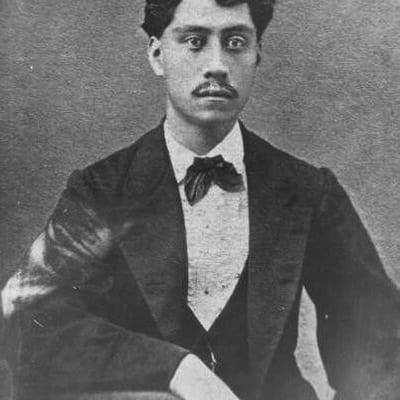
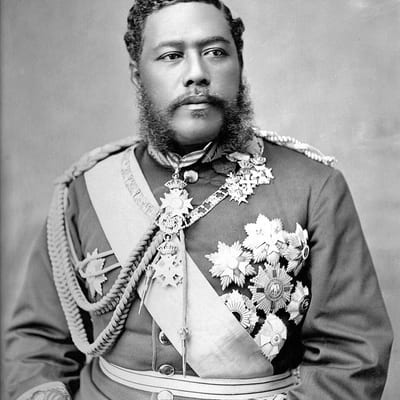
King Kamehameha (c 1758, I'm guessing October), Captain Cook's First Lieutenant, wrote (January 1778) about this young Hawaiian, one of the first to board their ship. In the boat log, he described a tall, striking, and muscular young man with an intense personality who observed everything with seriousness. They had no idea what awaited his future, yet it became clear as he united the islands, establishing governance that would change the political landscape of Hawai'i forever. He was the first king of Hawai'i, symbolizing sovereignty and unity in Hawaii. There always seems to be a connection between our youth and the paths we take, shaping who we become. He and I are connected in spirit, exemplifying a 'Path of truth' that reflects Clyde McClain Lewman's vision of unity.

Princess Ka'lulani

Princess Ka'lulani

Princess Ka'lulani

Princess Ka'lulani Lunalilo Kalaninuiahilapalpa Cleghorn - "The royal sacred one" (October 16, 1875) was named in tribute to Queen Victoria. As the Heir Apparent to the Hawaiian Kingdom, appointed by Queen Liliukolani, Princess Ka'iulani faced significant challenges for Hawai'i governance after her mother's death. At just 13 years old, she was sent to England and returned nine years later in November 1897 via Washington D.C. in a futile attempt to advocate for sovereignty in Hawaii and reclaim the Islands. Tragically, she died on March 6, 1899, from pneumonia, having caught a cold while horseback riding on the Big Island. Some say that she passed away from a broken heart, indicative of the political change Hawaii was undergoing at the time. It is my belief that she would have established a government akin to that of the United Kingdom, fostering unity in Hawaii. The spiritual energy from the islanders' encounter with Captain Cook remains a testament to this historical connection.

Haunani Kay Trask

Princess Ka'lulani

Queen Lilioukalani

Haunani-Kay Trask (October 3, 1949 - July 3, 2021) famously proclaimed, "We will die as Hawaiians. We will never be Americans," reflecting her deep commitment to sovereignty in Hawaii. As a Native Hawaiian activist, educator, author, poet, and prominent figure in the Hawaiian sovereignty movement, she significantly influenced discussions around Hawai'i governance. Trask served as professor emerita at the University of Hawai'i at Manoa, where she inspired many to advocate for political change in Hawaii. After reading her book shortly after I arrived to live in Hawai'i full time in late November 2016, I sought to meet her simply to be in her energy space, but it was not meant to be. However, in my heart, she and I share a connection rooted in the ongoing struggle for unity in Hawaii.

Queen Lilioukalani

Me (born Oct. 4th 1946)

Queen Lilioukalani

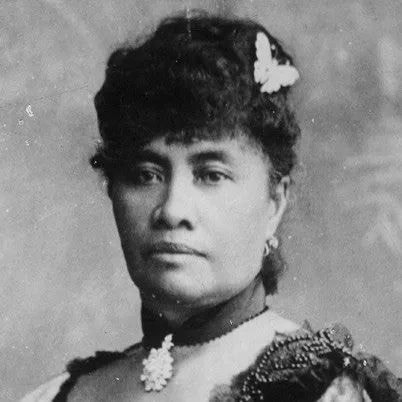
Born September 2nd, 1838, in Honolulu, Hawaii, and passing away on November 11, 1917, Queen Lilioukalani holds the distinction of being the first and only reigning Hawaiian queen, just ten days beyond being a Libra. Her brother, King Kalakaua, known as the 'Happy King,' was compelled to sign the Bayonette Constitution, which dramatically altered Hawai'i governance by transferring significant power to the Committee of Safety. During the period when Queen Lilioukalani was attempting to revise this constitution, the Committee of Safety, alongside 162 armed U.S. Marines, seized control of the palace, ultimately confining the queen to her bedroom for eight months. During this time, Sanford Dole crafted a new constitution that solidified control over the islands, leading to significant political change in Hawaii. In a poignant letter addressed to President William McKinley in 1875, she stated: 'I declare such a treaty to be an act of wrong toward the native and part-native people of Hawaii, an invasion of the rights of the ruling chiefs, in violation of international rights both toward my people and toward friendly nations with whom they have made treaties.' She went on to express that her actions were motivated by the desire for unity in Hawaii, avoiding conflict with the United States, and seeking to prevent violence and destruction. This historical moment not only highlights the struggle for sovereignty in Hawaii but also underscores the hope that the U.S. government would rectify the wrongs inflicted upon her people ('Hawaii’s Story', page 395).

Me (born Oct. 4th 1946)

Me (born Oct. 4th 1946)

Me (born Oct. 4th 1946)

I am with my beloved Bruno (2006), rebuilding the deck of my Yacats, Oregon cabin that has been in my family for more than 50 years. I was forced to sell it during my second divorce, leaving everything behind to live here. I'm in touch with my sister, but no other family. This process reminds me of the changes and challenges of governance in Hawai'i, both personally and politically. I often think about political change in Hawaii and the quest for sovereignty in Hawaii as I work on the cabin. My reflections on unity in Hawaii resonate deeply with my life experiences. 


Memorable statements from my two wives come to mind: my first wife once remarked, 'Your greatest ideas have cost us almost everything.' Close! Back in the mid-80s, I was making 225k per year exporting wood products to Western Europe. 


My second wife asserted, 'You have to make a joke out of everything.' Not quite true, but close enough—I replied, 'Why not?' 


Now, I talk mostly to dogs. 


My maternal grandmother was Helen Victoria Lyon, a connection that makes me ponder my heritage alongside the rich history of figures like Clyde McClain Lewman. I've also been told that I am related to Henry Loyd Lyon.

Please Donate $5.00 or more. Mahalo!

 Your generous donation will fund our mission.

Pay with PayPal or a debit/credit card

Featured Products

Featured Products

  • Privacy Policy
  • Terms and Conditions

Hawai'i - "The Courage to Change."

2790 Kahaloa Drive, Honolulu, Hawaii 96822, United States

808-859-1132

Copyright © 2026 mac808.com - All Rights Reserved.

Powered by

This website uses cookies.

We use cookies to analyze website traffic and optimize your website experience. By accepting our use of cookies, your data will be aggregated with all other user data.

Accept

Announcement

Welcome! Check out my new announcement.

learnMore